
Most book reviews are quick: a summary, an opinion, and a star rating. But Why Literature Still Matters by Jason Baxter isn’t the kind of book you finish and move on from. It’s the kind that reshapes how you read, and even why you read in the first place. After reading it a few months ago, I’ve gone back and reread parts of it multiple times.
Dr. Jason Baxter, a scholar of literature and the humanities, as well as the Director of the Center for Beauty and Culture at Benedictine College, enters a conversation that feels especially urgent right now: in a world obsessed with efficiency, productivity, and measurable outcomes, what place does literature still have? His response is both intellectually rich and deeply human. Literature, Baxter argues, teaches us how to see, how to attend, and how to live well. Through the lens of literature we are able to slow down and experience true beauty.
Reading this book reminded me of another title that profoundly shaped my reading life: C.S. Lewis’s An Experiment in Criticism. Like Lewis, Baxter invites readers to shift their focus away from dissecting books and toward receiving them. He guides us to read not as critics-in-training, but as attentive readers.
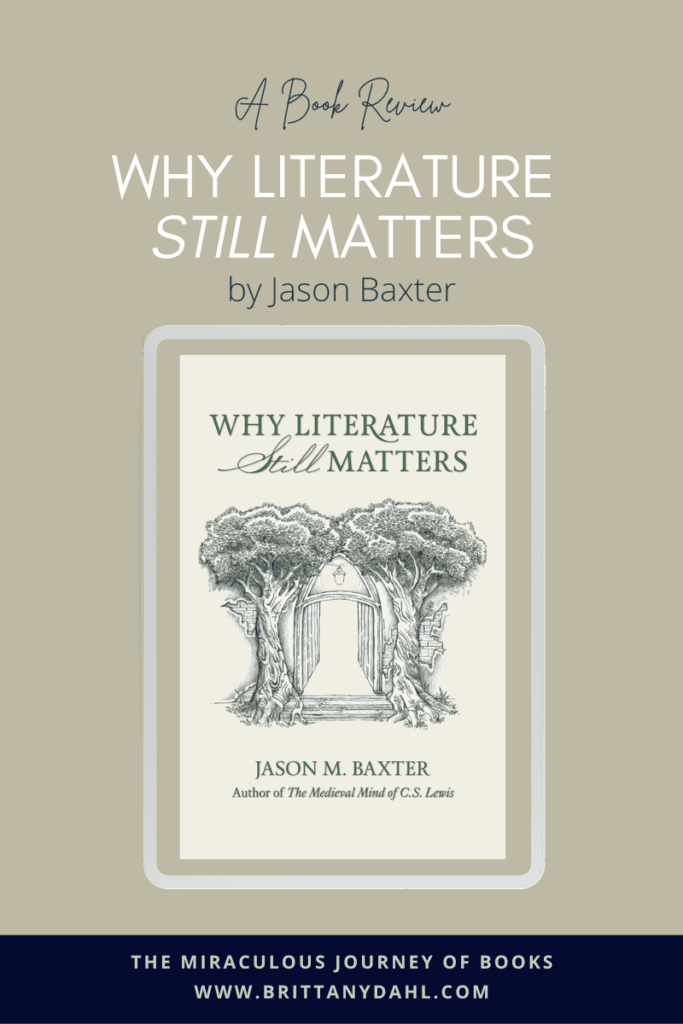
Summary of Why Literature Still Matters
Baxter’s central claim is simple but far-reaching: literature matters because it trains our attention toward truth, goodness, and beauty. He quotes Lewis in saying, “When we encounter beauty, it is almost always accompanied by a strange note of sorrow, a sorrow that arises because beauty feels like something over there, something external to me.”
Then he goes on to say, “But the good news is that I can, to whatever extent, close the gap between myself and the beauty out there. I can, to whatever extent get it—a little bit—into the marrow of my bones. I can, to whatever extent, eat beauty. And how? Through literature, of course! And painting, and architecture, and music. And liturgy.”
Rather than viewing books merely as tools for information or entertainment, he presents literature as a formative practice because it has the ability to slowly shape our inner lives over time.
Baxter draws from philosophy, theology, and literary criticism to argue that reading well is not about mastery or control, but humility and openness. I don’t think we’ll ever come to a place where we have “arrived” when it comes to being well read. There is always more to learn.
While sharing a couple of personal stories about traveling and exploring, Baxter consistently returns to the lived experience of reading. He shares what it feels like to be slowed, challenged, and changed by a text.
Age Level
I would recommend Why Literature Still Matters for:
- High school students who are beginning to take literature seriously and want to understand why they are reading these books
- College students and educators studying literature or the humanities
- Adults who want to learn what it means to read well; not just more books, but better ones (including rereading)
This is not a children’s book, but it is foundational for adults who hope to pass on a love of reading to the next generation.
Analysis and Evaluation
What the book accomplishes beautifully is restoring dignity to the act of reading. Literature is not an escape or an academic exercise. Because of reading we can expand our understanding and return to our everyday reality with new perspectives.
Baxter’s approach is analytical and philosophical. He does not attempt to catalog books or movements; instead, he explores what reading does to the reader.
The author supports his argument through a combination of philosophical reflection, literary examples, and also theological insight. I found his evidence compelling because it resonated with my own experience as a reader. Data has its place, but his arguments were well supported without throwing lots of numbers at the reader.
Rather than conflicting with other books I’ve read, this one clarified and deepened assumptions I already held but hadn’t fully articulated. This is especially true of ideas I first encountered in C.S. Lewis’s An Experiment in Criticism, which I had to read multiple times to comprehend!
Personally, this book helped me understand “the desire I feel to close the gap between what I see and what I am.” It’s a longing that always seems to be there, but putting a name to that feeling has truly changed the reason I read.
Book Club Suggestions for Why Literature Still Matters
This book works especially well in a thoughtful book club setting. Consider:
- Reading it slowly over several weeks
- Pairing it with An Experiment in Criticism by C.S. Lewis
- Discussing questions like:
- How has our culture shaped the way we read?
- What does it mean to read with humility?
- How might reading form us morally or spiritually?
This would be an excellent choice for an adult book club focused on formation, education, or the life of the mind.
Other Books by Jason Baxter
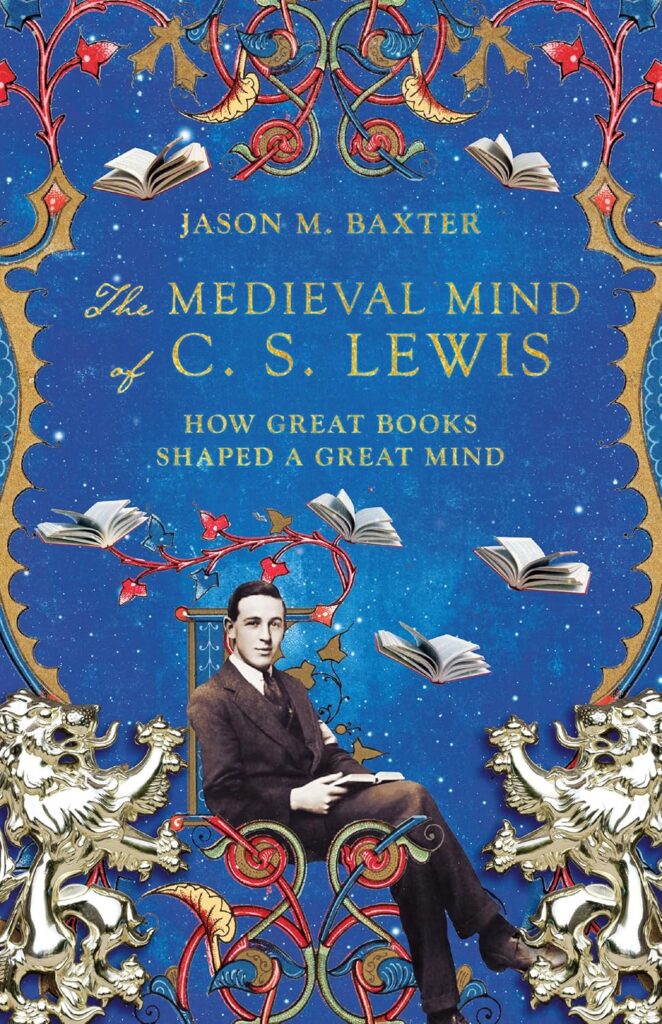
The Medieval Mind of C.S. Lewis
Why Literature Still Matters is a thoughtful and necessary book. Jason Baxter makes a compelling case for reading as a formative, life-giving practice. It shapes not just our minds, but our loves.
If you’ve ever felt that books have quietly shaped who you are, but struggled to explain why, this book will put words to that experience.
Find other book reviews in our book review library, and be sure to check out my other resources to help you make the most of your reading time with your kids.
I use affiliate links to share products with you. If you use the link to make a purchase, the cost of the book doesn’t go up for you. However, I will receive a commission, and I truly appreciate your support.